Are you a sports fan? If so, have you ever dressed in your team’s gear on game day and rejoiced after a victory with the celebration of “We won!”? The obvious answer is yes; that is what it means to be a fan. We identify with our team. However, the reality is that I sat on my couch eating chips and did absolutely nothing to affect my team’s ability to win or lose the game. I didn’t win, the team did. This is one example of social identity we regularly slip into to use group achievement to bolster our self-esteem.
Wednesday, April 3, 2024
Union With Christ - Romans 6:1-14
Are you a sports fan? If so, have you ever dressed in your team’s gear on game day and rejoiced after a victory with the celebration of “We won!”? The obvious answer is yes; that is what it means to be a fan. We identify with our team. However, the reality is that I sat on my couch eating chips and did absolutely nothing to affect my team’s ability to win or lose the game. I didn’t win, the team did. This is one example of social identity we regularly slip into to use group achievement to bolster our self-esteem.
Wednesday, March 27, 2024
Intro to Romans 5-8 series
NEW SERIES: Romans 5-8 – The Gospel Reveals A New Humanity
In our first series in Romans (1-4) we saw that the Gospel Reveals the Righteousness of God. Gospel means “Good News,” and the good news that we have received from God in his Son Jesus Christ is that God is both just and the justifier of those who believe in him. The truth is that we are all sinners separated from God deserving his wrath. God, I his great mercy and grace, provided salvation for those who believe in Jesus Christ. The wrath of God was satisfied in the sacrifice that Jesus freely offered on our behalf. Although chapters 1-4 started off pretty heavy, it set the stage for us to understand the good news of salvation accomplished through the righteous act of God.
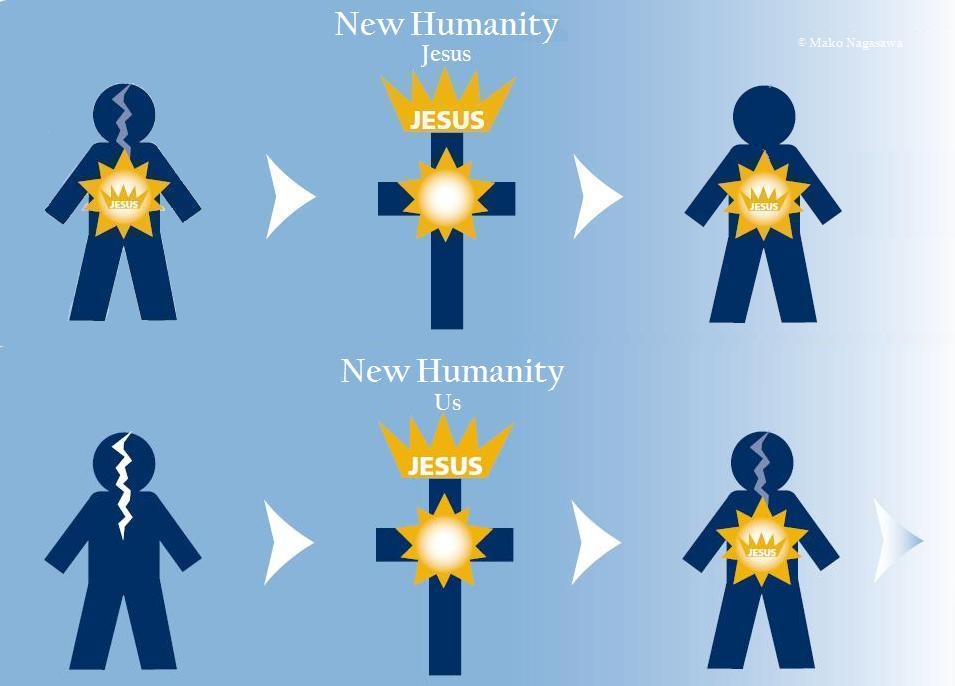
In this next series in Romans (5-8), we will see that the Good News reveals to us how to become a new humanity. Paul writes in 2 Corinthians 5:17, “Therefore, if anyone is in Christ, he is a new creation. The old has passed away; behold, the new has come.” Understanding that the gospel transforms us from dead to life and recreates from old to new is unpacked. Adam’s sin created a rupture that has impacted all of humanity and all of creation. He was the first figurehead and representative of the human race. However, Jesus is the 2nd Adam, he is the new figurehead and representative for all those who believe. Those who receive Christ are made new.
A new humanity, being made new in Christ, means that there is a new way to be human. We are no longer slaves to sin and death but are now made alive in Christ. This series will begin to unpack how we are to live as Christ followers in this world now that we have been reconciled to the Father.
Wednesday, March 20, 2024
Dating Worth A Letter to Students inspired by Eph 4
DATE WORTHY - EPH. 4
As we conclude our dating series tonight in Ephesians chapter 4, I think it is important to look back briefly at what Paul says about the LORD’s work in our lives that is the grounds for our new way of living, specifically in what we are going to be talking about in dating worthy. Ephesians 1-3 unpacks the Gospel and the abundant grace God has poured out on those who believe. In summary, let’s read Ephesians 2:1–5
“And you were dead in the trespasses and sins in which you once walked, following the course of this world, following the prince of the power of the air, the spirit that is now at work in the sons of disobedience—among whom we all once lived in the passions of our flesh, carrying out the desires of the body and the mind, and were by nature children of wrath, like the rest of mankind. But God, being rich in mercy, because of the great love with which he loved us, even when we were dead in our trespasses, made us alive together with Christ—by grace you have been saved”
We were dead and walking according to the sinful world that we lived in. We were hopelessly lost in our disobedience and doing whatever our desires dictated. We were children of wrath deserving eternal separation from God. BUT God moved toward us, he did for us what we could not do, and provided salvation through Jesus Christ. We were dead, he made us alive with Christ, through his grace. This is the basis of our calling and we need to understand it in order to allow it to affect our walk generally and our dating specifically.
1. Understand Your Calling – Eph. 4:1
As a believer, you were once spiritually dead and God has called you to life. What does a dead person do? Nothing. You could do nothing for yourself, but God did it for you. Paul’s understanding of the gospel leads him to call himself a prisoner.
a. Prisoner
What is a prisoner? Someone who is captive or hostage. Notice he says a prisoner “for” and not a prisoner “of” as God is not detaining us or holding us against our will. Rather, Paul felt so compelled by the grace of God to totally surrender his life to the cause of Christ. This is the pattern we should seek to emulate, as Dietrich Bonhoeffer said, “when Christ calls a man, he bids him to die.”
b. Calling
The calling we have been called to is to be followers of Christ and, therefore, children of God. Ephesians 2:10 reminds us that God has called us unto good works. His calling brings salvation and purpose. He has plan, our job is to walk in step with him as he reveals it.
c. Walk
Walk is a word used to describe our manner of life, our behavior, and our actions. The game of follow the leader best pictures the concept here, keep your eyes on the leader, go where he goes, and do what he does. Paul implores us to live in such a way that it is clear that we are Christians and our lifestyle points people to Jesus. One area of life that we are focusing on is Dating. As a Christian, date in a manner worthy of being a prisoner for Jesus Christ, date in a way that is worthy of bearing the name of Jesus.
2. Utilize God’s Gifts– Eph. 4:11-15
One way we can Date worthy and walk worthy is to utilize the gifts that God has given for our benefit. God has not left us alone in the pursuit of living worthy lives. He has given us gifts to equip us and guide us into a mature walk that will grow and build in love. First lets consider the gifts of Christian leaders:
a. Apostles, prophets, evangelists, shepherds, and teachers
In our context, God has given you pastors, youth leaders, and Christian friends to be godly influences in your life. As you are entering into thoughts about dating or dating relationships, turn to these people in your lives and allow them to speak truth and encouragement into your life. God has also given you parents who love you and care for you.
b. Equipping
If you were going to go on a hiking trip, what would you need? Shaq could readily tell you all the equipment you need for the hike: boots, backpack, water bottle, hiking sticks, a compass, and more. You would want to be equipped before you departed. Why, then, do we jump into dating relationships without properly being equipped or talking to our Christian leaders about how to be equipped for dating and marriage? You can identify whether a Christian is a gift from God or a distraction based on if they equip you according to God’s Word.
c. Mature in your walk with Jesus = mature in your approach to dating
A Christian leader who is a gift should help you develop a mature walk with Christ that will influence how you approach dating and romance. As babies, we all struggled to crawl and walk. We tumbled and bounced around, but eventually started getting the hang of it. All along the way, we had parents, aunts, uncles, and siblings helping us navigate through the awkward phases. God’s gifts are giving to help you navigate through the awkward phases and learn a mature stride that will cause you to grow and build a loving relationship.
3. Avoid Worldly Distractions – Eph. 4:17-19
Paul gets real direct, don’t walk the way unbelievers do. Don’t walk down that road. Do not follow their pattern (Rom. 12:2).
a. Don’t follow their pattern
Look around at the pattern of the world when it comes to dating. Some of your friends, classmates, or team members are following the world’s destructive paths. You see them at the lockers or at the school dances behaving in immature and even forbidden ways. Media, movies, and social media are constantly bombarding you with ideas and images about dating, romance, love, and marriage. Why would you want to follow the worlds’ pattern?
b. Futility of mind and hardness of hearts
The world follows their path because their mines are futile, they are ignorant of God’s truth, God’s design, and God’s plan. They sin because their hearts are hardened to the truth. The suppress the knowledge of God because they do not want accountability. That is what sin does, it hardens our hearts and pollutes our minds. They pursue sensual and impure things. Again I ask, why would you want to follow the worlds’ pattern? Because it seems to be attractive, fun, and carefree. But they only show one side of the story. They do not talk about the emptiness sexual activity creates with the lack of a commitment. They don’t reveal the sorrow, the searching, the pursuit of validation that never ends. They do not have the comfort, meaning, and purpose that Christ gives to believers.
4. Follow the Way of Christ – Eph. 4:20-32
So don’t follow their way, follow Christ.
a. Are you a Christian?
I’m not asking if you attend church or grew up in a Christian home. Are you a follower of Jesus, one who has surrendered to Christ and received forgiveness of sin. If you are truly a Christian, you are not your own but now belong to the LORD and should live accordingly. We do this by learning to putt off the old and putt on the new.
b. Put off the Old – Don’t give opportunity to the Devil
In dating, putting off the old is to stop following the sinful patterns of the world. We are instructed to not give the devil any opportunities in our lives. This means not looking at pornography, reading pornographic materials, and not engaging in any activity that will lead you astray. This means not going on dates or going to locations that will cause you to desire sin. Instead, put on the new…
c. Put on the New – righteousness and holiness
The new self, just like putting on new clothes, is clean and wholesome. Righteousness, doing the right thing, should become the normal activity of a follower of Christ. Pursuing holiness, being like Jesus, is a result of walking with Jesus. If you look at porn, stop looking at it and instead put on the new by looking at and filling your mind with godly things. If you are reading things that are causing you to think sexually, stop it and read the Bible or good Christian books that will help your thought life. If you are watching inappropriate TV shows or movies, stop and switch to watch RightNowMedia or other sources that will help you grow in your faith.
d. Fight Fair, Conflict and Communication – Eph. 4:31-32
Lastly, dating in a worthy manner is to learn to communicate effectively and navigate conflict in an appropriate way. Do not allow anger and wrath to lead you to a life of bitterness. Learn to forgive, learn to communicate and learn to be kind even in conflict.
So much more could be said, but the idea is there: walk with Jesus and date worthy. When you fix your eyes on Jesus, follow him, and allow him to influence your dating life, you will not regret it. He designed you and has plans for you. Follow him, walk with him daily, and practice his principals in your dating relationships.
Wednesday, February 28, 2024
Date Worthy - Begin with the end in mind
“Begin with the end in mind” is Habit #2 in Stephen Covey’s book “7 Habits of Highly Effective People,” which has remained a best seller for over 30 years. When I considered the title of this session, I wasn’t thinking about his book, the phrase just popped in my head. However, it is always good to give credit where credit is due, and his book was beneficial to me. The 7 Habits (click for a summary) all are practical and helpful in life and relationships. However, I want you to focus on “Beginning with the end in mind.”
What comes to your mind as you look at the picture above? A precious picture of a couple growing old together, still in love, and walking hand in hand. It captures a lifetime of memories and the idea of journeying together through life. I believe that is a great image to capture a successful relationship goal.
However, I want you to look farther ahead than this, and consider Revelation 19:6–9:
6 Then I heard what seemed to be the voice of a great multitude, like the roar of many waters and like the sound of mighty peals of thunder, crying out, “Hallelujah! For the Lord our God the Almighty reigns. 7 Let us rejoice and exult and give him the glory, for the marriage of the Lamb has come, and his Bride has made herself ready; 8 it was granted her to clothe herself with fine linen, bright and pure”—for the fine linen is the righteous deeds of the saints. 9 And the angel said to me, “Write this: Blessed are those who are invited to the marriage supper of the Lamb.” And he said to me, “These are the true words of God.” (ESV)
In this passage, we see Jesus Christ, the Lamb, has come for his Bride, the Church, for a great feast! One day, Jesus will return to call all those who belong to him for an eternal celebration. He uses the image of a wedding feast to capture the joy and celebration of this reunion.
As we consider dating and relationship goals, to begin with the end in mind we should consider the ultimate goal of being reunited with our Savior and living in light of that day. This means that we must take seriously what it means to be a Christian and understand how following Christ impacts the decisions we make in our lives and in our dating relationships. Jesus said,
Luke 14:27–30
Whoever does not bear his own cross and come after me cannot be my disciple. For which of you, desiring to build a tower, does not first sit down and count the cost, whether he has enough to complete it? Otherwise, when he has laid a foundation and is not able to finish, all who see it begin to mock him, saying, ‘This man began to build and was not able to finish.’
If I could paraphrase slightly, he/she that desires to be in relationship but doesn’t first count the cost is a fool. I see it all the time, young people find themselves in a dating relationship and they have no idea what they are doing? They want to figure things out as the go along without considering the cost. There are many things in life that learning as you go is a fine strategy because the risk is minimal. However, romantic relationships are not one of those because the risk is great and you’re interacting with a real person who has real feelings.
And so, it is my mission to encourage young people to think about what they are doing and plan accordingly by “beginning with the end in mind.” What is the end goal of dating? Marriage. Let’s unpack marriage by reading Ephesians 5.
Marriage is to be a picture of Christ and the Church. We have already seen in Revelation 19 this imagery plays out in promise of a future feast and celebration. If you understand that your marriage is to be a reflection of Christ and his Church, then that should impact the way you consider dating. Before we delve into the specifics that Paul addresses for the biblical model of marriage, let’s identify some key themes that lay the foundation for a healthy biblical model.
Chapter 5 opens with “therefore,” which should cause you to pause and say, “what is it there for?” Paul has spent 4 chapters in Ephesians declaring the abundant grace of God that has been given to believers by faith in Christ. Heavenly blessings, forgiveness of sins, adoption, salvation, and the promised Holy Spirit, to name a few. Repeatedly we are reminded that we are forgiven of our sins and that God is working in us to make us blameless and pure. This is significant to remember because God is calling us to pursue holy lives in all areas, and especially in our relationships.
Because God had done this for us, we should imitate God as children who are loved. Seeing how much God loves us should motivate us to live in obedience. We live “from” love not “for” love (think about that).
Pursue Purity – Eph. 5:3-6
If we are imitators of Christ, then it should go without saying that “sexual immorality” and “all impurity” have nothing to do with our lives and relationships. Students love to ask, “how far can we go without crossing the line into sin?” This question is the wrong question for us to be asking. It reveals our desire to flirt with sin. Rather, we should ask questions like, “how can I glorify God the most in my interactions?” or “how pure can I be in my relationships?”
Sexual immorality, from the Greek word porneia, means any form of sexual conduct outside of the marriage relationship. This is any activity the causes you or someone else to desire sex. This includes looking at images on your phone or computer. This includes sending pictures of your body to provoke thoughts. As well as physical touch that is inappropriate for those who are not married. Parents should have direct conversations with their children about expectations when it comes to physical romantic interactions.
This principal comes with a warning…allowing yourself to get caught up into sexual immorality and impurity pursues a life outside of the kingdom of Christ. This is an area that the Bible warns about God’s wrath for disobedience. Sex is a powerful interaction and wonderful gift to be enjoyed the way God intends in marriage.
How can I prepare to pursue purity before I am in a relationship? Establish boundaries. Don’t wait until you’re in the heat of the moment to come up with a boundary. Don’t wait until you’ve gone too far to establish a boundary. Here is a truth statement, once you have crossed a line it is harder to not cross that line again. Establish healthy limits now.
Purity in relationships is a high priority for me, so I prayerfully worked through thoughts on boundaries. One phrase I say is that “I want my physical touch to display my heart and not my hormones.” Look let’s be honest with each other, there is an appeal to sex and romantic encounters. Every human that goes through puberty begins to desire the opposite sex. Giving into these appetites just because we feel them is giving into our hormones. However, we are called to sacrificial love (I’m getting ahead of myself) and therefore discipline ourselves to be able to withstand temptations. Attaching true love to physical intimacy means learning how to serve your date by pursuing purity through marriage. We can’t do this alone, so it is good to have accountability.
Accountability Eph. 5:7-13
Paul further explains how we should not partner with the disobedient but walk in the light. He shares the concept of exposing sin by bringing it into the light. Think of sin as mold or fungus that thrives in the darkness. Once you bring it into the daylight it shrivels up and dies. That is the way it is with sexual temptations. When we struggle with temptations and sinful activity, we tend to keep it hidden in the dark. When it is hidden and in the dark it has power over us. However, when we bring it in the light it loses its power, and we can find freedom and forgiveness.
Reactionary Accountability
When you are stuck in sin, finding an accountability to partner who will lead you to the grace of Jesus through prayer is so important. Our leaders and I want to help students overcome sinful habits and patterns. But it takes courage to expose our sins and when someone does talk about them, it is a judgment free zone. The Holy Spirit brings conviction, we who hear a confession need to have compassion and grace as we lead to the truth that brings freedom: Jesus.
Proactive Accountability
Know yourself and don’t trust yourself. The Bible says, “Therefore let anyone who thinks that he stands take heed lest he fall” (1 Corinthians 10:12). It is a good habit to get in to communicate with parents or accountability partners when you are spending time with a romantic interest. Homecoming, Prom, dances, movies, and dates all bring temptations. I apply this by telling someone when I am going on a date. A simple text, “hey I will be on a date tonight, feel free to check in on me or ask me about it tomorrow.” This puts the thought in my head that my accountability partner may ask me if I behaved, which keeps me in the light. It is a psychological truth that hidden things bring temptation but revealed things relieves temptations.
Self-Control Eph. 5:15-21
In this section, Paul is encouraging you to be wise and walk in integrity. Really, he is telling you to have self-control. His appeal to not be drunk, meaning do not be controlled by any substance, but be filled with the Spirit is how we walk in purity. One of the fruits of the Spirit is self-control (Gal. 5:22). Keeping Christ in our hearts and conversation will guide us to serve one another in love.
Now that we have covered all this, we can better appreciate what Paul says about marriage.
Marriage as a Picture of Christ and the Church – Eph. 5:21-33
Mutual Submission “submitting to one another out of reverence for Christ.”
Submission is a hot topic today, and rightly so. There are so many misconceptions about this word and misapplication about this passage. Many begin teaching on marriage with verse 22, “wives submit to your husbands.” Yet, submission is a principal for all believers, both men and women, to display reverence for Jesus.
Submission is “to rank or order yourself under” a leader. Tim Challies does a great write up about the difference between submission and subjection, you can read HERE. In summary, submission is a voluntary action and subjection is a forced action. Submission is not a bad word. Jesus submits to the Father, the Church submits to Jesus, we submit to one another, and wives submit to husband.
Wives Submit like the Church – Eph. 5:22-24
In God’s economy, the husband is the head of the home. This means that he is responsible for the success or failure of the marriage. This does not mean he is emperor or dictator. This is not to encourage domineering or authoritarian leadership. In a moment we will talk about what the husband is to be like. But first, Paul addresses the wives.
When reading Ephesians 5:22-24, husband should never read this passage and tell their wives to submit to them. These verses are written to the wife, and she should read them as a reminder of what God calls her to be. She should ask, “how can I submit to my husband? How can I respect him?”
Husbands Love like Jesus – Eph. 5:25-33
In order for a wife to submit to her husband, he must be like Christ to her. Sacrificial love is the key to a healthy marriage. Jesus left heaven and gave himself up for the church. Husbands are to die to self and serve their wives in a similar fashion. Peter encourages husbands to seek to understand their wives and cherish her (1 Peter 3:7). Paul talks about the oneness of flesh as a husband who loves his wife loves himself.
Christlike love is the lynch pin of a successful marriage. Servant leadership and sacrificial love is what headship is to emulate, which builds trust and safety for a wife to want to submit out of respect.
Beginning with the end in mind when dating is to pursue becoming a man or woman that emulates Christ. It’s learning to submit yourself to Christ now by living obedient and faithful lives. Guys need to consider looking for girls they are willing to serve and sacrifice for. Girls need to look for guys they respect and can follow. Keeping this focus, pursuing purity, and having accountability will set you up for a rewarding dating relationship.
Wednesday, February 21, 2024
DATE WORTHY - A New Series
This post is a descriptive overview of our dating series beginning next week, February 28, 2024
Ephesians 4:1
"I therefore, a prisoner for the Lord, urge you to walk in a manner worthy of the calling to which you have been called..."
1 - Begin With The End In MInd - Ephesians 5:1-2; 21-33.
“Marriage is what brings us together today…” if you know you know lol. What is marriage? What is God’s design for marriage? How does knowing the biblical teaching on marriage influence a Christian’s approach to dating? In this session we will unpack key principals I discuss in pre-marriage sessions and wedding ceremonies. We will also explore how to break up when a relationship is not healthy. A Christian is to be an imitator of Christ is all aspects of life, and especially in the most important human relationship they engage in.
2 - Get Healthy - Psalm 139.
Dating does not define you, God does. In this session we will discuss the importance of personal healthy: spiritually, emotionally, mentally, physically, and socially. No boyfriend/girlfriend or husband/wife can fix you, only Christ can. A dating relationship and marriage can only be as healthy as the individuals who commit to each other. We will discuss how to address dating myths and build a solid foundation to become a datable and marriable person.
3 - Love vs. Lust - 1 Corinthians 13.
This session will unpack what true, biblical love is…to will the ultimate good of another. Lust and selfish desires permeate the cultural message. Pornography dominates the internet. Social Media and Smartphones distort the meaning of love. Shows like “The Bachelor” cheapen romance and marriage. Being biblically grounded in a true definition of love will help give guard rails in the journey of dating and romance. Boundaries are so important for young people as they consider dating.
4 - Date In A Worthy Manner - Ephesians 4:1-3, 17-32.
This session will be putting it all together and explore the importance of living out Christian values in your dating life and future marriages. We will discuss conflict, forgiveness, and the importance of developing communication skills. This session will end with a panel discussion where the leaders will do a Q&A with the students. A Christian is to live their lives in a worthy manner of the gospel, all the more, they should date in a worthy manner of their Lord and Savior.
Wednesday, February 14, 2024
Valentines, Ash Wednesday, and a Call to Die
Happy Valentine’s Day! Or should I say Happy Ash Wednesday? This Valentine’s Day is unique in that it shares its day with Ash Wednesday, the day that begins the Lenten Season. Lent, for those who are unfamiliar with it, is 40 days of preparation before celebrating Easter. Lent is a season of fasting, repentance, and reflection on Scripture. Lent, and therefore Ash Wednesday, dates move slightly each year in connection with Easter Sunday.
Valentine’s Day, on the other hand, is on February 14 each year. Valentine’s Day, today, is the celebration of love, the passing on of love notes, and tokens of love (such as chocolates and flowers). The red heart has become the ubiquitous symbol of the holiday. Why these traditions? Why February 14? And why St. Valentine?
Historical Development
The origins of this holiday are lacking. There is little knowledge of St Valentine other than his martyrdom supposedly on February 14, 269 AD. There is no connection to “love” being associate with Valentine until Geoffery Chaucer wrote a poem about birds finding a mate on Valentine’s Day in 1412. Then William Shakespeare’s use of his name in Hamlet and coining the phrase “to be your Valentine” (Hamlet, Act IV, Scene 5). And then in 1784, Joseph Johnson’s nursery rhyme further promoted Valentine’s Day and gave us the origins of “roses are red and violets are blue...”
"The rose is red, the violet's blue,
The honey's sweet, and so are you.
Thou art my love and I am thine;
I drew thee to my Valentine:
The lot was cast and then I drew,
And Fortune said it shou'd be you."
It was shortly after this time that the tradition of sending and receiving cards began in England, when a British publisher issued The Young Man’s Valentines Writer, filled with suggestions for those who could not find the right romantic words. This set-in motion the Hallmark Holiday we experience today. But why the focus on romantic love?
Fact or Fiction
Folk legend states that married men could leave the Roman military, so the emperor forbid the marriage of soldiers. The legend states that St. Valentine would secretly perform marriages for Christian soldiers against the law of Rome. This endeared him to the Christians, but angered Rome and they imprisoned him. Letters were sent to the prison by the couples he wed, thanking him for performing this act of love. Rome than martyred him. This legend claims it is the thank you notes that became our love letters tradition.
Another legend states that Valentine fell in love with his jailer’s daughter. Shortly before he was martyred, he wrote a note to her and signed it “your Valentine.” And thus, the sending of Valentine notes.
Neither of these legends seem to have actual historical evidence, other than the fact that Valentine was martyred. If these are not the roots, then what else could be? Some claim that the Church chose to celebrate St. Valentine on February 14 to replace the pagan Roman festival called Lupercalia (Wolfe Festival). One practice on this holiday was that all the girls’ names would be put into a box and the boys would draw out a name at random. These new couples would be united for a year and the lovers would exchange gifts. Being a pagan holiday debauchery and lasciviousness would follow.
The pope put an end to Lupercalia and promoted Valentine’s Day. However, syncretism (a mingling of beliefs) took place and the Christian holiday adopted various themes from the pagan festival. This is explicitly demonstrated by this report from an Encyclopedia written over a hundred years ago, “February 14 in England and Scotland in olden times was accompanied by a peculiar custom. On the eve of the day dedicated to St. Valentine, young people gathered and placed in an urn a collection of tickets corresponding to their number that were designated with the names of young girls; later each removed one such ticket. The girl whose name was given in this manner to a young man became his ‘Valentine’ for the coming year, just as he became her ‘Valentine’; this entailed the young people having a relationship among themselves that was similar to the description in medieval romances of that between a knight and his ‘lady of the heart.’”
One Orthodox priest claims that Lupercalia was a Rome worship of the god Faunus, a god of fertility. Faunus worship can be traced back to the Greek god Pan, and even further back to the Phoenician sun god, Baal. He then connects the line to Nimrod, the founder of the ancient city of Babylon, who received Baal as a title, and given the names Lupercus, since he hunted wolves, and Valentinus, meaning “strong, powerful, and mighty.” Not only that, but in the ancient Chaldean language “bal” was the word for “heart” and became the symbol for Nimrod. The orthodox priest continues his claim that February 14 is the celebration of Nimrod’s birth.
Is this the true beginning of Valentine’s Day? Are any of these myths or legends true? Is participating in sending Valentine’s notes and flowers actually participating in pagan festival rites? Who knows? Most of the various theories cannot be proven or fully developed. The only verifiable and historical truth we can claim is that St. Valentine did exist and he did die for being a Christian.
Persevering Love and Faith
St. Valentine’s story is more appropriately aligned with Ash Wednesday than our current Valentine’s Day celebrations. Bishop Valentine pastored at a cathedral outside of Rome on the route of pilgrims from the north. He remained faithful until the end, when he was beheaded by Rome for his love for Christ. His persevering faith and love for Jesus is something worthy of celebrating, admiring, and emulating in our own lives.
Since we have grown accustomed to the expressions of love on this holiday, let us consider 1 John 4:7–12
“7 Beloved, let us love one another, for love is from God, and whoever loves has been born of God and knows God. 8 Anyone who does not love does not know God, because God is love. 9 In this the love of God was made manifest among us, that God sent his only Son into the world, so that we might live through him. 10 In this is love, not that we have loved God but that he loved us and sent his Son to be the propitiation for our sins. 11 Beloved, if God so loved us, we also ought to love one another. 12 No one has ever seen God; if we love one another, God abides in us and his love is perfected in us.”
In this passage we see that “God is love” not “love is god.” That’s a big distinction. Our culture worships “love” and praises cheap imitations of genuine love. “Love is love” is a phrase passed around demanding acceptance of various expressions of romance that are not consistent with God’s holy Word. “Love is from God” and should be treated as holy, in purity and faithfulness. God demonstrated love by pursuing us and providing for us. He is the reason that we can love.
God’s love reveals our sinfulness. We become aware of how undeserving we are of his love. We become aware of the great chasm that sin has caused between us. And we are overwhelmed by his generous demonstration of love through his Son, Jesus Christ, our propitiation from sin. Yes, I got it in there, my favorite Bible word: propitiation!
Our sin deserves the wrath of God and eternity in Hell. Jesus came on our behalf and stood in the gap. He received the wrath of God in our stead and made a satisfactory sacrifice for all of our sin. This is what propitiation means, Jesus’ suffering satisfied the wrath of God and provided a way for us to be reconciled with the Father.
This is the love that compelled St. Valentine to stand firm, even at the cost of his life. This is the love that invites us to repent, reflect, and fast to draw closer to our Savior. Consider the RCA’s comments on Ash Wednesday, “We begin this holy season by acknowledging our need for repentance and our need for the love and forgiveness shown to us in Jesus Christ. I invite you, therefore, in the name of Christ, to observe a Holy Lent, by self-examination and penitence, by prayer and fasting, by practicing works of love, and by reading and reflecting on God's Holy Word.”
Observing Ash Wednesday and Lent can be a rewarding season of celebrating the finished work of Christ. However, one should be careful not to think of the Lenten practice as a means of earning salvation or diminishing the work of Christ. Ash Wednesday is a reminder of the fragility of life “ashes to ashes and dust to dust”, it is also reminder to “repent and believe the gospel.” The gospel is the invitation of Christ to “come and follow me.”
Dietrich Bonhoeffer, a pastor that was hanged for being part of a conspiracy to assassinate Hitler, once said “When Christ calls a man, he bids him come and die.” Consider Matthew 6:24-26, when Jesus calls us to take up our cross and follow him. Or Romans 12:1 to be a living sacrifice.
It is in this invitation, to “come and die” that St. Valentine’s story and Ash Wednesday coalesce. The love of God compels us through the provision of his Son to give up our own lives and follow him.
Standing up for Christ and loving others the way Christ loves them is how we can faithfully answer the call and honor St. Valentine today.
Happy Valentine’s Day.